Author

Leon Shaw

Advertising

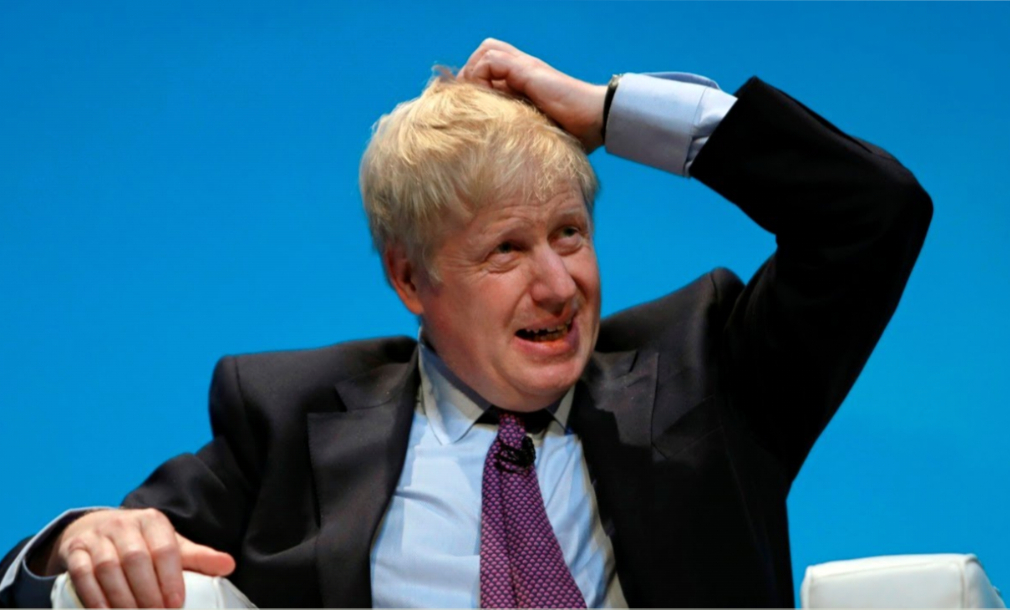
After a series of political crises surrounding Boris Johnson, his position as prime minister came under serious pressure. The situation developed against a backdrop of internal disagreements within the government and declining support within the Conservative Party.

Boris Johnson regretted revealing the truth

According to British media reports, the discussion of Christopher Pincher’s appointment and explanations regarding previous complaints raised additional questions from MPs. The Prime Minister’s public comments only drew more attention to the issue and provoked a new wave of criticism within the party.

We will miss you, Boris Johnson

Despite the criticism, Johnson still had supporters who noted his role in implementing Brexit and the Conservatives’ victory in the 2019 election. However, the political reality has changed: after a series of ministerial resignations, it became clear that the level of trust in the head of government had significantly declined.

Scandal! Boris Johnson didn’t know the microphone was on?

Particular attention was drawn to an episode during one of the interviews, when, after the official part of the broadcast, journalists recorded an additional comment by the politician. Although the content of the remark has not been officially confirmed, the incident itself was actively discussed in the media.

Sad news about Boris Johnson! Unfortunately, it’s true!

At the same time, the investigation into the so-called ‘Partygate’ scandal continued — a situation involving events held in government buildings during the COVID restrictions. Johnson was fined for participating in one of the events, and an official report pointed to violations of the established rules.

Against the backdrop of these factors, the Prime Minister announced his intention to resign, acknowledging that the party needed a new leader.

Was the broadcast interrupted after Boris Johnson’s speech?

During one of the speeches, the technical broadcast was indeed briefly interrupted. This sparked discussion on social media, but no official statements were made about any unscheduled remarks.

The tragic news about Boris Johnson came 17 minutes ago

The resignation came after several days of intense consultations within the government. The decision was made after a significant number of ministers and MPs publicly declared their loss of confidence in the current prime minister.

TV: Boris Johnson showed a banned platform live on air

During public discussions, Johnson referred to various sources and publications, which also became the subject of political controversy. However, these were publicly available materials with no restrictions on their use.

The story of Boris Johnson’s resignation is an example of how a combination of political crises, public statements and internal party processes can lead to a change in the country’s leadership.


Recent parliamentary debates involving British Prime Minister Keir Starmer have sparked renewed public interest following discussions about historical connections related to a previous diplomatic appointment.

The debates intensified after archival correspondence, previously reported in the media, became the subject of political discussion once again. Opposition representatives asked questions about how past contacts are assessed when appointing people to public office and what vetting procedures are in place.

Speaking in Parliament, Starmer emphasised that personnel decisions are made based on the information available at the time of appointment, as well as within established procedures and national interest requirements. He noted that assessing past events often requires taking historical context into account.

Some parts of his speech were actively discussed on social media, where individual quotes were shared without full context. This sparked a wave of comments and heightened interest in the topic of transparency and standards for appointments to high government positions.

During television interviews, there were also brief technical pauses, which attracted the attention of viewers. Broadcasting companies did not link these moments to the content of the discussion, but the episodes became part of a broader online discussion about politicians’ public communication.

International observers have noted that such parliamentary debates reflect a broader question: how governments assess past professional contacts, especially if they have subsequently become controversial.

At the same time, the authorities have not announced any new legal action, and the discussion remains at the political and institutional level.

For Starmer’s government, the current situation is a matter of trust and transparency of procedures. For observers, it is an example of how previously published information can once again become the focus of attention and influence contemporary political dialogue.

In the digital environment, even individual phrases from speeches can quickly spread and be interpreted in different ways, intensifying public debate on complex issues.

Advertising

Quantum computing represents one of the most intriguing frontiers in contemporary science. Unlike classical computers, which process information in binary bits, quantum systems utilise quantum bits, or qubits, capable of representing multiple states simultaneously. This characteristic, rooted in principles of superposition and entanglement, allows quantum computers to perform certain calculations in fundamentally different ways. In the UK, research institutions and technology firms are actively exploring how quantum systems might influence fields ranging from cryptography to materials science.

The scientific foundations of quantum computing are complex and grounded in quantum mechanics. Maintaining qubits in stable states requires extremely controlled environments, often involving temperatures close to absolute zero. Even minor disturbances can disrupt calculations, a challenge known as decoherence. Researchers are developing error-correction techniques and experimenting with different qubit materials, including superconducting circuits and trapped ions. Progress in stabilising and scaling these systems remains central to advancing practical applications.

One anticipated area of impact is cryptography. Current encryption methods rely on mathematical problems that are computationally demanding for classical machines. Quantum algorithms, such as Shor’s algorithm, suggest that sufficiently advanced quantum computers could process certain calculations more efficiently. This possibility has prompted the development of post-quantum cryptography, aiming to design encryption standards resilient to future quantum capabilities. UK cybersecurity agencies and research groups are contributing to these efforts to ensure data protection remains robust.

Pages: 1 2

Space exploration has entered a new phase defined not only by national agencies but also by private companies seeking to expand human presence beyond Earth. In the UK, interest in the space sector has grown steadily, with investment in satellite technology, research facilities and launch capabilities. While government organisations such as the UK Space Agency coordinate policy and collaboration, commercial enterprises increasingly contribute to technological development. This partnership between public institutions and private firms is reshaping how missions are planned, funded and executed.

Satellite technology forms a cornerstone of modern space innovation. Communications, navigation and weather forecasting systems rely heavily on satellites orbiting the Earth. British companies are involved in designing and manufacturing small satellites, often referred to as CubeSats, which offer cost-effective alternatives to traditional large-scale models. These smaller platforms can be launched in clusters, enabling flexible deployment for research or commercial applications. Advances in miniaturisation and materials science have made such projects more accessible to universities and start-ups.

Commercial launch services represent another evolving aspect of the space industry. Historically dominated by major spacefaring nations, rocket launches are now increasingly conducted by private aerospace companies. The development of reusable rocket components has reduced certain operational costs and introduced new competitive dynamics. In the UK, proposals for domestic spaceports in Scotland and Cornwall illustrate ambitions to participate more directly in launch activities. Establishing these facilities involves coordination across environmental, regulatory and engineering domains.

Pages: 1 2

Advertising

Biotechnology combines biological science with technological innovation, enabling researchers to explore complex living systems in new ways. In the UK, biotechnology plays a significant role in healthcare research, agriculture and environmental management. From gene editing tools to advanced laboratory diagnostics, developments within this field continue to reshape scientific understanding. The convergence of molecular biology, computational modelling and engineering has expanded the scope of what researchers can investigate and apply.

One notable area of biotechnology is genomic research. Advances in DNA sequencing technology have reduced costs and increased processing speed, allowing scientists to analyse genetic information with greater precision. This capability supports studies into inherited conditions, population genetics and personalised medicine approaches. While genetic insights offer promising directions, ethical considerations surrounding data privacy and consent remain central to ongoing debates. Regulatory frameworks aim to ensure responsible research practices while encouraging innovation.

Gene editing technologies, including CRISPR-based systems, have opened new avenues for modifying specific DNA sequences. Researchers are investigating potential applications in agriculture, such as developing crops more resilient to environmental stress. In medical research, gene editing tools assist in studying disease mechanisms at a molecular level. These techniques require careful oversight, particularly when considering long-term implications. Scientific communities emphasise rigorous evaluation and ethical review before clinical applications proceed.

Pages: 1 2

The transition towards renewable energy has become a defining feature of scientific and technological progress in the twenty-first century. In the UK, commitments to reduce carbon emissions have accelerated research and investment in alternative energy sources. Wind, solar and tidal power now contribute a significant share of national electricity generation. Innovation within these sectors continues to refine efficiency, storage capacity and integration with existing infrastructure, shaping a more diversified energy landscape.

Offshore wind energy represents one of the UK’s most prominent achievements in renewable development. Coastal regions provide favourable conditions for large-scale wind farms, where turbines harness consistent sea breezes. Advances in turbine design have increased capacity while improving durability in challenging marine environments. Floating wind platforms are also being explored, enabling deployment in deeper waters previously considered unsuitable. These technological improvements expand geographical possibilities and contribute to national energy resilience.

Solar technology has similarly advanced, with improved photovoltaic cell efficiency and declining manufacturing costs. While the UK climate is not as sunny as some regions, solar panels still generate meaningful output throughout the year. Innovations in energy storage, particularly battery systems, address intermittency challenges by storing surplus electricity for later use. Research into solid-state batteries and alternative storage materials aims to enhance reliability and lifespan, supporting broader adoption of solar installations in residential and commercial settings.

Pages: 1 2

Advertising

Artificial intelligence has moved from the realm of science fiction into everyday reality. Across the UK, AI systems are now integrated into healthcare diagnostics, financial services, transport planning and customer support platforms. Rather than existing as a single technology, artificial intelligence refers to a collection of tools and models designed to analyse data, recognise patterns and assist in decision-making. As computing power has increased and large datasets have become more accessible, AI applications have expanded rapidly, prompting both excitement and careful debate about their broader implications.

One of the most visible areas of AI development is automation. Machine learning algorithms can process large volumes of information more quickly than traditional manual methods. In sectors such as logistics, predictive models help optimise delivery routes and manage inventory levels. In healthcare research, AI systems assist in identifying trends within medical imaging or patient records, supporting clinicians in interpreting complex data. These applications do not replace human expertise entirely; instead, they often function as analytical tools that complement professional judgement.

Natural language processing has further extended AI’s reach. Virtual assistants, chatbots and translation software rely on algorithms capable of understanding and generating human language. In UK businesses, customer service platforms frequently use AI-driven systems to respond to routine enquiries, enabling staff to focus on more complex tasks. Meanwhile, educational institutions experiment with AI-supported tutoring tools that provide personalised feedback. The development of large language models has broadened possibilities, though it has also raised questions regarding accuracy, bias and responsible deployment.

Pages: 1 2

Haircare is deeply personal, influenced by texture, density, lifestyle and environmental factors. In the UK, varying weather conditions—from damp winters to occasional summer heatwaves—can affect how hair behaves throughout the year. Establishing an effective routine begins with understanding individual hair type and adjusting products and techniques accordingly. Rather than following every emerging trend, a consistent approach tailored to specific needs often yields more manageable and healthy-looking results.

Straight hair tends to reflect light easily, giving it a naturally glossy appearance. However, it may also become oily more quickly as sebum travels smoothly along the hair shaft. Lightweight shampoos and conditioners can help maintain balance without weighing strands down. Overwashing, though, may stimulate additional oil production. Spacing washes appropriately and incorporating dry shampoo when necessary can preserve volume. Heat styling tools should be used with protective sprays to minimise potential damage.

Wavy and curly hair often requires additional moisture. The natural bends in these textures can make it more difficult for oils to distribute evenly from root to tip, leading to dryness at the ends. Hydrating conditioners and leave-in treatments support definition and softness. Many individuals with curls benefit from gentle detangling methods, such as using wide-tooth combs on damp hair. Diffusers attached to hairdryers can enhance natural shape while reducing frizz, particularly during humid UK weather.

Pages: 1 2

Advertising

Personal style is often associated with high-profile designers and carefully curated social media feeds, yet everyday fashion is far more practical and individual. Across the UK, from busy city centres to quieter towns, most people are seeking outfits that feel comfortable, appropriate and reflective of their personality. Effortless confidence in clothing does not emerge from copying others exactly; it develops through understanding what suits your body shape, lifestyle and preferences. By focusing on a few core principles, everyday dressing can become more intentional and less stressful.

Fit is one of the most influential aspects of style. Even the most expensive garment can look unbalanced if it does not sit properly on the body. Paying attention to shoulder seams, sleeve length and trouser hems makes a noticeable difference. Tailoring adjustments are often more accessible than assumed and can transform off-the-peg pieces into well-fitting staples. In the UK, many local alteration services provide simple modifications at reasonable cost. Choosing silhouettes that complement natural proportions encourages comfort and poise throughout the day.

Colour selection also contributes to effortless style. While trends may spotlight specific shades each season, identifying colours that harmonise with your skin tone can simplify shopping decisions. Some individuals gravitate towards cool tones such as blues and greys, while others prefer warmer hues like olive or rust. Building a wardrobe around a cohesive colour palette makes mixing and matching easier. Accent colours can then be introduced through accessories, scarves or footwear without overwhelming the overall look.

Pages: 1 2

Seasonal fashion trends shape retail collections and influence how people refresh their wardrobes throughout the year. In the UK, where weather patterns can shift quickly, seasonal dressing requires both adaptability and awareness of current styles. From spring florals to autumnal layering, fashion cycles reflect broader cultural moods and practical considerations. Understanding these shifts allows individuals to incorporate trends selectively without compromising personal style.

Spring collections often introduce lighter fabrics and brighter colour palettes. As temperatures gradually rise, designers tend to favour breathable materials such as cotton blends and lightweight denim. Pastel tones, floral prints and relaxed tailoring commonly appear in high-street shops across cities like London and Edinburgh. Transitional pieces, including trench coats and midi skirts, accommodate unpredictable weather. These items provide flexibility during days that alternate between sunshine and showers.

Summer fashion in the UK balances style with practicality. While warmer days invite linen dresses, tailored shorts and open footwear, occasional rain showers remain a reality. Lightweight jackets and structured blazers frequently accompany summer outfits to prepare for cooler evenings. Accessories such as sunglasses and woven bags add seasonal character. Music festivals and outdoor events also influence trends, encouraging bold prints and playful layering.

Pages: 1 2

Advertising

Newer Posts

Advertising